Fill your cart and request a quote


Behind the scenes of shaping with Stéphane Dugit, national route setter

Behind the scenes of shaping with Stéphane Dugit, national route setter https://origin-96.com/pub/origin96/retouch3_bis.jpg Step behind the scenes at Origin 96   "Before a hold finds its place on a wall, there is the eye of a climber, the hand of a shaper, and the passion of an entire craft." Stéphane Dugit   Since 1996, a passion for climbing has guided us. We are, first and foremost, climbers — creators of enjoyment. Today, we return to the roots of climbing with polyester (PE) holds that are more environmentally responsible, more durable, and closer to buyers through fair pricing. Shaping is far more than simply “sculpting” a hold for indoor climbing. It is the art of translating an idea of movement into a tangible form that a climber will feel, handle and interpret. Every curve, every edge, every texture influences the way we climb — the body’s trajectory, tension, balance, fluidity of movement, and above all, the pleasure it brings. A slight rounding changes the way a sloper is gripped; a different angle can turn a dynamic jump into a coordination move. Because comfort and safety begin with shape: a well-shaped hold allows climbers to move without pain or injury. The shaper considers the natural ergonomics of the hand, the climber’s skin, and wrist positioning. Each shaper has their own signature — like a designer or craftsman leaving their mark on a creation. At Origin 96, our team of shapers is led by national route setter Stéphane Dugit.   Profile of Stéphane Dugit, National Route Setter and Shaper at Origin 96 Stéphane, what has your career path in the climbing world been like? First and foremost, I am passionate about nature and climbing. I started out as a climbing instructor with one simple goal: to share my passion and pass on the joy of climbing. At the same time, I had the opportunity to compete at a high level, as a member of the French national team from 1994 to 2005. Route setting then became a major part of my career. As a national route setter, I contributed to the creation of routes for three World Cups, one European Championship and one World Championship in Chamonix — an experience that was both demanding and deeply rewarding. After my competitive career, I spent ten years with Climb Up, where I served as Head of Route Setting. I trained route setters across the network, took part in launching new gyms, and managed the purchasing of climbing holds for the entire group. Since 2020, I have joined Volx as Site Manager. Even today, I am driven by the same ambition: to help grow the passion for climbing in all its forms and continue sharing it with as many people as possible.   What is your vision of the shaper’s craft? What makes a hold “successful”? Today, a successful hold is, above all, one that is beautiful, comfortable and inspiring for route setting. When these three elements come together, you already have something strong. But ultimately, I’m not the one who decides whether a hold is truly successful — route setters and climbers do. They are the ones who bring it to life on the wall. If a hold gives them pleasure, inspires them, or pushes them to go beyond their limits, then yes, you can say it’s successful.   How do you combine comfort and performance? Through talent and experience, of course! The advantage of sculpting in foam is that you can immediately touch, feel and visualize the hold as it will be on the wall. If the grip isn’t comfortable, I reshape it, rebalance the form, or simply start again. It’s a constant process of refinement, where every detail matters in finding the right balance between efficiency and climbing pleasure.         What is your favorite type of shape? I have a soft spot for crimp-style holds. It’s a type of grip I truly enjoy — both technical and demanding — requiring precision and commitment. I’d love to bring this kind of hold back into the spotlight, as it’s not as widely favored by route setters today   What makes Origin 96 shapes unique? Even before the choice of material, it’s the shape that determines a hold’s durability. A good design reduces stress points, extends the product’s lifespan and ensures consistent grip over time. The real challenge is creating beautiful, comfortable holds while using as little material as possible. It sounds simple on paper — but in reality, it’s much more complex. At Origin 96, this high standard goes hand in hand with our choice of polyester (PE), resulting in holds that are technical, strong and long-lasting. Our shapes stand out for their functional simplicity, without unnecessary excess — holds designed by climbers, for climbers.   Shaping: the art of creating sensations What is shaping? Shaping is the art of designing and sculpting climbing holds — the ones you find on gym walls or in competitions. Before being molded or manufactured, every hold is born in the hands of a shaper — an artisan who is often at once a climber, an artist and a technician. Their role is to imagine hold shapes from a simple block of material. Starting with a block of polyurethane foam, they remove material piece by piece, shaving by shaving, grain by grain, until a hold prototype emerges. Shaping is not just another step in the process — it is the very heart of the craft.   What are the essential criteria for a shaper?   A shaper has to think about everything: hand comfort, climber safety, hold durability, but also the pleasure of contact and the technical precision of movement. This begins with ergonomics, the surface dedicated to grip, and optimizing the amount of material used to control production costs. In addition, the shaper must design a complete range, varying the function of future holds (jugs, pinches, slopers, crimps, footholds, etc.) as well as their size — from XS to large macro holds. « Even with a well-established production process, a shaper must always think like a climber.” Stéphane Dugit   From the shaper’s hand to the climber’s movement Before a climbing hold reaches the wall of a gym, it passes through the skilled hands of a shaper. Once the form is validated, the shape becomes a master model, carefully sanded and refined. It is then entrusted to the lab, where the molding phase begins. From this master, Joffrey, our technician, creates a production mold that allows the hold to be reproduced identically, while ensuring precision and long-term durability. At Origin 96, we work exclusively with polyester (PE) — the historic material of climbing, renowned for its abrasion resistance, exceptional durability and rock-like feel. (See our article “Why We Remain Committed to PE.”) The PE is mixed with the chosen pigment, poured into the mold, and then polymerized to create a solid, uniform climbing hold. Each hold is then removed from the mold, inspected, drilled and hand-finished before being prepared for shipping. At Origin 96, we operate within a short supply chain model, staying close to gyms, clubs and climbers. Every order is carefully prepared and packaged in our French facility: holds are vacuum-protected and shipped in reinforced boxes to ensure safe transportation. Depending on your needs, we can also supply the appropriate screws for quick and hassle-free installation. But our role does not end with production. We remain attentive to your needs, advising you on hold selection, helping you design future routes or boulder, and ensuring smooth and responsive logistics. That is the Origin 96 spirit: a close partner, from the shaper’s hand to the climber’s wall. Discover the O’xygen collection, shaped by Stéphane Dugit and the Origin 96 team. Tips & advice

Step behind the scenes at Origin 96


"Before a hold finds its place on a wall, there is the eye of a climber, the hand of a shaper, and the passion of an entire craft." Stéphane Dugit
 

retouch1

Since 1996, a passion for climbing has guided us. We are, first and foremost, climbers — creators of enjoyment. Today, we return to the roots of climbing with polyester (PE) holds that are more environmentally responsible, more durable, and closer to buyers through fair pricing.

Shaping is far more than simply “sculpting” a hold for indoor climbing. It is the art of translating an idea of movement into a tangible form that a climber will feel, handle and interpret.

Every curve, every edge, every texture influences the way we climb — the body’s trajectory, tension, balance, fluidity of movement, and above all, the pleasure it brings. A slight rounding changes the way a sloper is gripped; a different angle can turn a dynamic jump into a coordination move.

Because comfort and safety begin with shape: a well-shaped hold allows climbers to move without pain or injury. The shaper considers the natural ergonomics of the hand, the climber’s skin, and wrist positioning.

Each shaper has their own signature — like a designer or craftsman leaving their mark on a creation.

At Origin 96, our team of shapers is led by national route setter Stéphane Dugit.


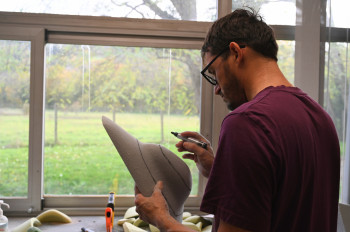
Profile of Stéphane Dugit, National Route Setter and Shaper at Origin 96
retouch6

Stéphane, what has your career path in the climbing world been like?

First and foremost, I am passionate about nature and climbing.

I started out as a climbing instructor with one simple goal: to share my passion and pass on the joy of climbing.
At the same time, I had the opportunity to compete at a high level, as a member of the French national team from 1994 to 2005.

Route setting then became a major part of my career. As a national route setter, I contributed to the creation of routes for three World Cups, one European Championship and one World Championship in Chamonix — an experience that was both demanding and deeply rewarding.

After my competitive career, I spent ten years with Climb Up, where I served as Head of Route Setting. I trained route setters across the network, took part in launching new gyms, and managed the purchasing of climbing holds for the entire group.

Since 2020, I have joined Volx as Site Manager. Even today, I am driven by the same ambition: to help grow the passion for climbing in all its forms and continue sharing it with as many people as possible.


What is your vision of the shaper’s craft?

What makes a hold “successful”?

Today, a successful hold is, above all, one that is beautiful, comfortable and inspiring for route setting.
When these three elements come together, you already have something strong.

But ultimately, I’m not the one who decides whether a hold is truly successful — route setters and climbers do. They are the ones who bring it to life on the wall.
If a hold gives them pleasure, inspires them, or pushes them to go beyond their limits, then yes, you can say it’s successful.
 

retouch3 bisHow do you combine comfort and performance?

Through talent and experience, of course!
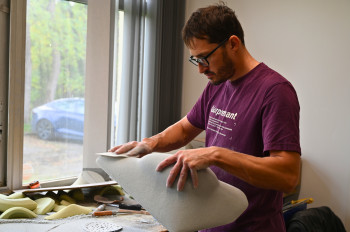
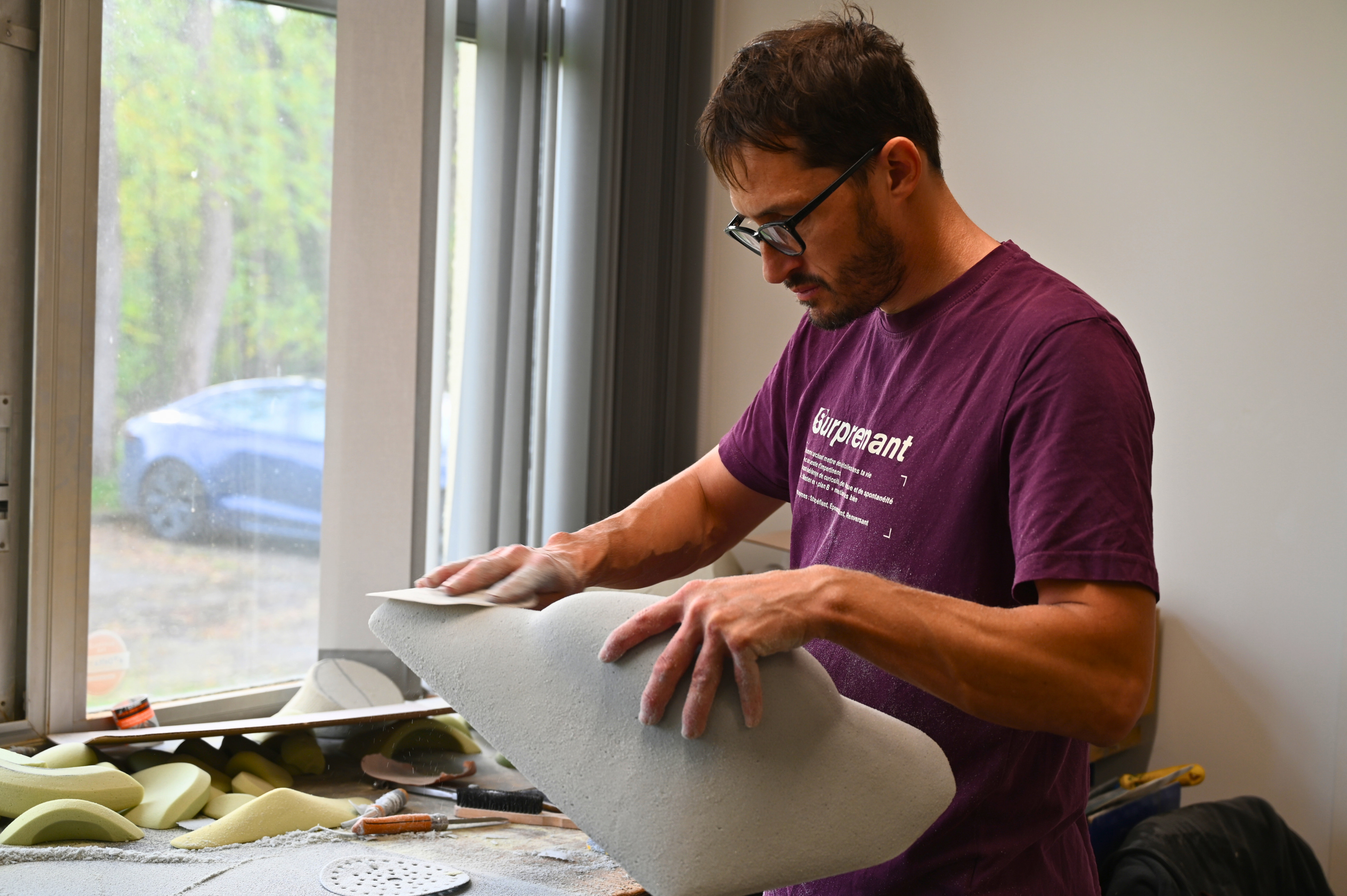
The advantage of sculpting in foam is that you can immediately touch, feel and visualize the hold as it will be on the wall.

If the grip isn’t comfortable, I reshape it, rebalance the form, or simply start again.
It’s a constant process of refinement, where every detail matters in finding the right balance between efficiency and climbing pleasure.


What is your favorite type of shape?

I have a soft spot for crimp-style holds.
It’s a type of grip I truly enjoy — both technical and demanding — requiring precision and commitment. I’d love to bring this kind of hold back into the spotlight, as it’s not as widely favored by route setters today


What makes Origin 96 shapes unique?
thumbnail_1000016658

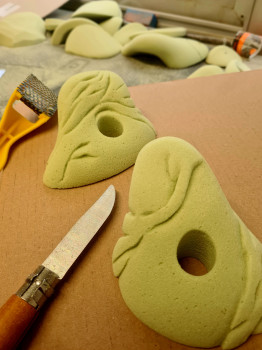
Even before the choice of material, it’s the shape that determines a hold’s durability. A good design reduces stress points, extends the product’s lifespan and ensures consistent grip over time.

The real challenge is creating beautiful, comfortable holds while using as little material as possible. It sounds simple on paper — but in reality, it’s much more complex.

At Origin 96, this high standard goes hand in hand with our choice of polyester (PE), resulting in holds that are technical, strong and long-lasting. Our shapes stand out for their functional simplicity, without unnecessary excess — holds designed by climbers, for climbers.


Shaping: the art of creating sensations

What is shaping?

Shaping is the art of designing and sculpting climbing holds — the ones you find on gym walls or in competitions.
Before being molded or manufactured, every hold is born in the hands of a shaper — an artisan who is often at once a climber, an artist and a technician.

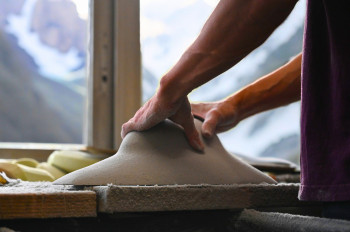
Their role is to imagine hold shapes from a simple block of material. Starting with a block of polyurethane foam, they remove material piece by piece, shaving by shaving, grain by grain, until a hold prototype emerges.

Shaping is not just another step in the process — it is the very heart of the craft.


What are the essential criteria for a shaper?


A shaper has to think about everything: hand comfort, climber safety, hold durability, but also the pleasure of contact and the technical precision of movement.
This begins with ergonomics, the surface dedicated to grip, and optimizing the amount of material used to control production costs.
In addition, the shaper must design a complete range, varying the function of future holds (jugs, pinches, slopers, crimps, footholds, etc.) as well as their size — from XS to large macro holds.

« Even with a well-established production process, a shaper must always think like a climber.” Stéphane Dugit


From the shaper’s hand to the climber’s movement

Before a climbing hold reaches the wall of a gym, it passes through the skilled hands of a shaper.

Once the form is validated, the shape becomes a master model, carefully sanded and refined. It is then entrusted to the lab, where the molding phase begins.
From this master, Joffrey, our technician, creates a production mold that allows the hold to be reproduced identically, while ensuring precision and long-term durability.
At Origin 96, we work exclusively with polyester (PE) — the historic material of climbing, renowned for its abrasion resistance, exceptional durability and rock-like feel. (See our article “Why We Remain Committed to PE.”)
The PE is mixed with the chosen pigment, poured into the mold, and then polymerized to create a solid, uniform climbing hold. Each hold is then removed from the mold, inspected, drilled and hand-finished before being prepared for shipping.

At Origin 96, we operate within a short supply chain model, staying close to gyms, clubs and climbers.
Every order is carefully prepared and packaged in our French facility: holds are vacuum-protected and shipped in reinforced boxes to ensure safe transportation.

Depending on your needs, we can also supply the appropriate screws for quick and hassle-free installation.

But our role does not end with production. We remain attentive to your needs, advising you on hold selection, helping you design future routes or boulder, and ensuring smooth and responsive logistics.

That is the Origin 96 spirit: a close partner, from the shaper’s hand to the climber’s wall.
Discover the O’xygen collection, shaped by Stéphane Dugit and the Origin 96 team.
8 min.
Behind the scenes of shaping with Stéphane Dugit, national route setter
Share :