Fill your cart and request a quote


What is the real cost of a climbing hold?

What is the real cost of a climbing hold? https://origin-96.com/pub/origin96/cout_de_revient.png The real cost of a climbing hold: transparency and quality at a fair price When equipping a wall or setting a new boulder, few climbers — and even fewer gym managers — truly know what lies behind the price of a climbing hold. Between raw materials, manufacturing, logistics, communication and distributor margins, the final cost can vary significantly from one manufacturer to another. In a fast-growing market where holds have become true technical and aesthetic tools, not all professionals share the same approach or economic model. Some rely heavily on brand recognition and marketing, while others prioritize short supply chains and transparency. At Origin 96, we have made a clear choice: to make quality accessible. By giving equal importance to both direct sales and intermediaries, we offer polyester holds at a fair price — without compromising durability, finishing or design. This article reveals the true cost of a climbing hold and explains why our model allows us to deliver high-quality, French-made holds that remain accessible to everyone.   Breaking down the price of a hold: where does your money really go? Behind every climbing hold lies a complex production chain, where each step matters. To understand the true cost of a hold, we must first break down its composition. At Origin 96, we estimate that the overall price of a hold is divided into three main cost categories.   Raw materials: 30% of production cost This is the heart of the product: resin, polyester (PE), molds, dual texture finishing, and color pigments. The quality of these materials directly impacts durability, grip comfort and climber safety. At Origin 96, we prioritize sourcing high-quality raw materials from Europe — and in some cases from France itself. For example, our pigments and PDM resin are produced in France.         Workforce:20 % of production cost. This is the human side of the process. Each hold is molded, sanded, inspected and hand-finished to meet strict standards of quality and consistency. Our molds are also manufactured in-house at our facilities. The holds are then carefully packaged and boxed for shipment. We also have a dedicated logistics manager to ensure efficient delivery of your orders. This local expertise is a true guarantee of reliability — but it naturally represents a significant share of the cost of a climbing hold.     Operating and commercial costs: 50% of the total cost This category includes everything that surrounds the life of the brand: purchasing management, communication and marketing, storage, transportation, administrative management and distribution. This is where the biggest differences between manufacturers tend to appear. For some brands, this portion can increase significantly due to intermediaries’ margin — distribution platforms, resellers or importers — each adding their own margin to the final price. The result is that customers often pay much more for a product of identical quality. At Origin 96, our philosophy is straightforward: we maintain a balanced pricing approach between distributors and direct clients, so that every euro invested ultimately serves the quality of the product first.                       Raw materials: 30% of the cost, but 100% essential Raw materials represent around 30% of the total cost of a climbing hold — and they are undoubtedly the most decisive factor when it comes to quality and durability. At Origin 96, we have chosen to use French polyester (PE), known for its exceptional strength and superior resistance to mechanical stress and long-term wear. This material offers several concrete advantages: it retains its original texture — close to natural rock — for longer and does not weaken under temperature variations. It also aligns with an eco-conscious approach, as its extended lifespan reduces the need for frequent replacement, and therefore limits waste production. In addition, PE is less polluting than PU plastic. At Origin 96, we believe that a fair price should never come at the expense of performance. Every hold we produce is designed to last, to deliver consistent sensations over time, and to guarantee safety and climbing enjoyment for every user.     Workforce: 20% of the cost, local craftsmanship Behind every Origin 96 hold are skilled hands. Workforce represents around 20% of the cost of a hold, but it is what gives the finished product its true technical and aesthetic value. Each hold is manufactured in France, in our factory, by a team that masters every step of the process — from Stéphane Dugit’s shaping to molding, sanding, quality control and packaging. This local production is not just a marketing statement; it is a guarantee of reliability, responsiveness and ethical standards. It allows us to closely monitor each batch and ensure fast, efficient delivery. Investing in skilled local labor means investing in durability and precision. It also reflects a strong belief: true craftsmanship cannot be relocated — it is cultivated, refined, and felt in every single hold.   The remaining 50%: getting the holds to you The final portion of a hold’s cost — around 50% — covers everything that allows Origin 96 to exist, innovate and stay closely connected to its community. These expenses include communication, marketing, logistics, storage and sales operations. Unlike some market players who outsource these functions to external distributors, we have chosen to retain control over our model. This independence allows us to manage costs more effectively, remain agile, and above all stay closely aligned with the real needs of climbers and gym operators. Our commercial strategy is built on a simple and direct model: Online sales, enabling us to offer our holds at a fair price directly from the manufacturer. A specialized sales team, available to support gyms in selecting volumes and hold ranges tailored to their projects. An active presence on social media, where we share our latest releases, commitments and community feedback — ensuring clear and direct communication. We also take part in the Paris Climbing trade show, a key moment in our strategy. It provides a valuable opportunity to connect with professionals, route setters and passionate climbers. These events allow us to showcase our innovations, test products live, and reaffirm our vision: making climbing more accessible and more sustainable by staying close to you. At Origin 96, every euro invested in these areas is not an unnecessary expense — it is a commitment to the climbing community.     Less at Origin 96: the weight of intermediaries’s margin In the climbing industry, many brands rely on large distribution platforms or specialized resellers to market their holds. While this system is effective in reaching a broad audience, it comes with a major drawback: each intermediary adds its own margin to the final price : more or less big. As a result, a hold sold at €20 from the manufacturer can end up priced at €26 or more once it reaches the end customer — an increase of around 30% that does not reflect any improvement in quality or service. This artificial inflation reflects the complex logistics embedded within intermediary margins — positioned between the producer and the climber. At Origin 96, we have chosen a different model: favor direct sales through pricing policy. We primarily sell directly from our workshop to ensure fair and transparent pricing. While we do collaborate with a limited number of distributors, they do not benefit from significant pricing advantages, allowing us to maintain balanced margins and protect the value of the product.  This operating model offers several concrete advantages: Fair and stable pricing, because you buy directly from the source. Real proximity with our clients — gyms, route setters, competitors — who can communicate directly with our team. Strong responsiveness, whether for orders, advice, delivery times or custom projects. Continuous innovation, because direct feedback from users constantly fuels our thinking and new designs. In short, an Origin 96 hold costs less because its price is built around what truly matters. It is our way of combining performance, durability and transparency, while supporting a local, ethical and accessible production model. “Discover our range and experience the difference of buying directly from the manufacturer.”     Tips & advice

The real cost of a climbing hold: transparency and quality at a fair price

When equipping a wall or setting a new boulder, few climbers — and even fewer gym managers — truly know what lies behind the price of a climbing hold. Between raw materials, manufacturing, logistics, communication and distributor margins, the final cost can vary significantly from one manufacturer to another.

In a fast-growing market where holds have become true technical and aesthetic tools, not all professionals share the same approach or economic model. Some rely heavily on brand recognition and marketing, while others prioritize short supply chains and transparency.

At Origin 96, we have made a clear choice: to make quality accessible. By giving equal importance to both direct sales and intermediaries, we offer polyester holds at a fair price — without compromising durability, finishing or design.

This article reveals the true cost of a climbing hold and explains why our model allows us to deliver high-quality, French-made holds that remain accessible to everyone.


Breaking down the price of a hold: where does your money really go?

Behind every climbing hold lies a complex production chain, where each step matters. To understand the true cost of a hold, we must first break down its composition. At Origin 96, we estimate that the overall price of a hold is divided into three main cost categories.


Raw materials: 30% of production cost

peinture

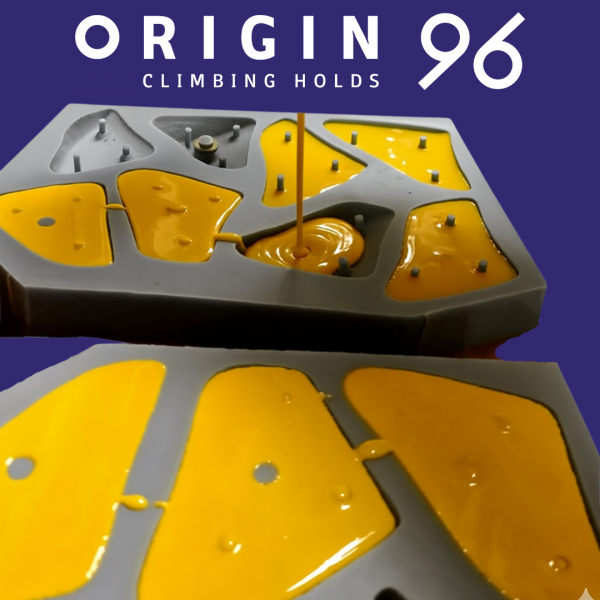
This is the heart of the product: resin, polyester (PE), molds, dual texture finishing, and color pigments. The quality of these materials directly impacts durability, grip comfort and climber safety.
At Origin 96, we prioritize sourcing high-quality raw materials from Europe — and in some cases from France itself. For example, our pigments and PDM resin are produced in France.


Workforce:20 % of production cost.

This is the human side of the process. Each hold is molded, sanded, inspected and hand-finished to meet strict standards of quality and consistency. Our molds are also manufactured in-house at our facilities.

The holds are then carefully packaged and boxed for shipment. We also have a dedicated logistics manager to ensure efficient delivery of your orders.

This local expertise is a true guarantee of reliability — but it naturally represents a significant share of the cost of a climbing hold.


Operating and commercial costs: 50% of the total cost

rak

This category includes everything that surrounds the life of the brand: purchasing management, communication and marketing, storage, transportation, administrative management and distribution. This is where the biggest differences between manufacturers tend to appear.
For some brands, this portion can increase significantly due to intermediaries’ margin — distribution platforms, resellers or importers — each adding their own margin to the final price. The result is that customers often pay much more for a product of identical quality.
At Origin 96, our philosophy is straightforward: we maintain a balanced pricing approach between distributors and direct clients, so that every euro invested ultimately serves the quality of the product first.


cout de revientcout de revient concurrents


Raw materials: 30% of the cost, but 100% essential

peinture1

Raw materials represent around 30% of the total cost of a climbing hold — and they are undoubtedly the most decisive factor when it comes to quality and durability. At Origin 96, we have chosen to use French polyester (PE), known for its exceptional strength and superior resistance to mechanical stress and long-term wear.

This material offers several concrete advantages: it retains its original texture — close to natural rock — for longer and does not weaken under temperature variations. It also aligns with an eco-conscious approach, as its extended lifespan reduces the need for frequent replacement, and therefore limits waste production. In addition, PE is less polluting than PU plastic.

At Origin 96, we believe that a fair price should never come at the expense of performance. Every hold we produce is designed to last, to deliver consistent sensations over time, and to guarantee safety and climbing enjoyment for every user.


Workforce: 20% of the cost, local craftsmanship

shaping

Behind every Origin 96 hold are skilled hands. Workforce represents around 20% of the cost of a hold, but it is what gives the finished product its true technical and aesthetic value.

Each hold is manufactured in France, in our factory, by a team that masters every step of the process — from Stéphane Dugit’s shaping to molding, sanding, quality control and packaging. This local production is not just a marketing statement; it is a guarantee of reliability, responsiveness and ethical standards. It allows us to closely monitor each batch and ensure fast, efficient delivery.

labo

Investing in skilled local labor means investing in durability and precision. It also reflects a strong belief: true craftsmanship cannot be relocated — it is cultivated, refined, and felt in every single hold.


The remaining 50%: getting the holds to you

The final portion of a hold’s cost — around 50% — covers everything that allows Origin 96 to exist, innovate and stay closely connected to its community. These expenses include communication, marketing, logistics, storage and sales operations.

Unlike some market players who outsource these functions to external distributors, we have chosen to retain control over our model. This independence allows us to manage costs more effectively, remain agile, and above all stay closely aligned with the real needs of climbers and gym operators.

Our commercial strategy is built on a simple and direct model:

  • Online sales, enabling us to offer our holds at a fair price directly from the manufacturer.
  • A specialized sales team, available to support gyms in selecting volumes and hold ranges tailored to their projects.
  • An active presence on social media, where we share our latest releases, commitments and community feedback — ensuring clear and direct communication.

We also take part in the Paris Climbing trade show, a key moment in our strategy. It provides a valuable opportunity to connect with professionals, route setters and passionate climbers. These events allow us to showcase our innovations, test products live, and reaffirm our vision: making climbing more accessible and more sustainable by staying close to you.

At Origin 96, every euro invested in these areas is not an unnecessary expense — it is a commitment to the climbing community.


Less at Origin 96: the weight of intermediaries’s margin

In the climbing industry, many brands rely on large distribution platforms or specialized resellers to market their holds. While this system is effective in reaching a broad audience, it comes with a major drawback: each intermediary adds its own margin to the final price : more or less big.
As a result, a hold sold at €20 from the manufacturer can end up priced at €26 or more once it reaches the end customer — an increase of around 30% that does not reflect any improvement in quality or service. This artificial inflation reflects the complex logistics embedded within intermediary margins — positioned between the producer and the climber.

At Origin 96, we have chosen a different model: favor direct sales through pricing policy.

We primarily sell directly from our workshop to ensure fair and transparent pricing. While we do collaborate with a limited number of distributors, they do not benefit from significant pricing advantages, allowing us to maintain balanced margins and protect the value of the product. 

This operating model offers several concrete advantages:

  • Fair and stable pricing, because you buy directly from the source.
  • Real proximity with our clients — gyms, route setters, competitors — who can communicate directly with our team.
  • Strong responsiveness, whether for orders, advice, delivery times or custom projects.
  • Continuous innovation, because direct feedback from users constantly fuels our thinking and new designs.

In short, an Origin 96 hold costs less because its price is built around what truly matters. It is our way of combining performance, durability and transparency, while supporting a local, ethical and accessible production model.
“Discover our range and experience the difference of buying directly from the manufacturer.”


9 min.
What is the real cost of a climbing hold?
Share :